-
Superluminal Wave Activation at Relativistic Magnetized Shocks
Fast radio bursts (FRBs) are millisecond flashes of radio light so bright they can be seen across the Universe. Many are thought to come from magnetars—neutron stars with ultra-strong magnetic fields. Our work tests a new idea: shear fluctuations in a magnetar wind can hit a shock and activate a plasma wave mode that can…
-
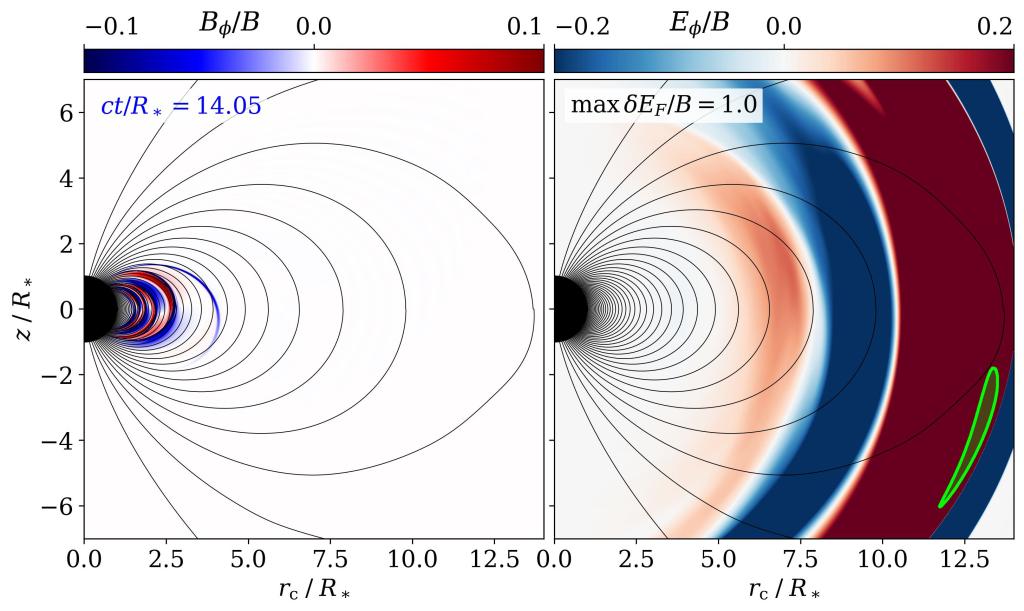
Force-free wave interaction in magnetar magnetospheres: Computational modeling in axisymmetry
Magnetars, highly magnetized neutron stars, can have crustal quakes that disrupt their magnetic fields, causing X-ray and fast radio bursts (FRBs). This study uses simulations to model plasma waves in magnetar magnetospheres and understand the transport of magnetic energy. We found that Alfvén waves can transform into fast magnetosonic (FMS) waves, especially when opposite-moving Alfvén…
-
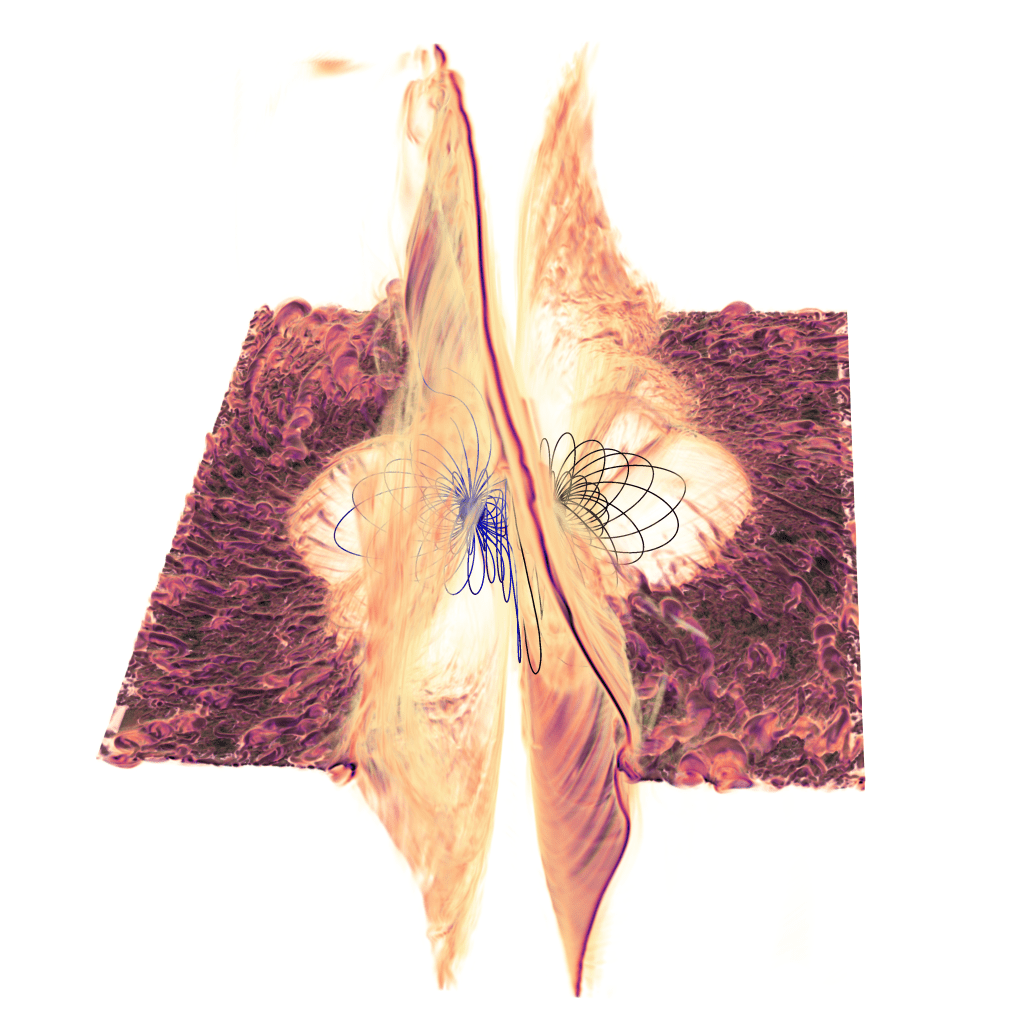
How ultra-magnetized Kelvin-Helmholtz drag impacts precursor emission in neutron star binaries
When binary neutron stars merge, they produce remarkable signals that help astrophysics understand their composition and magnetized environments. The strong magnetic fields of neutron stars orbiting each other interact vividly. Astronomers are excited about possible electromagnetic signals before the merger – to foreshadow a neutron star collision before studying them in detail. The so-called Kelvin-Helmholtz…
-
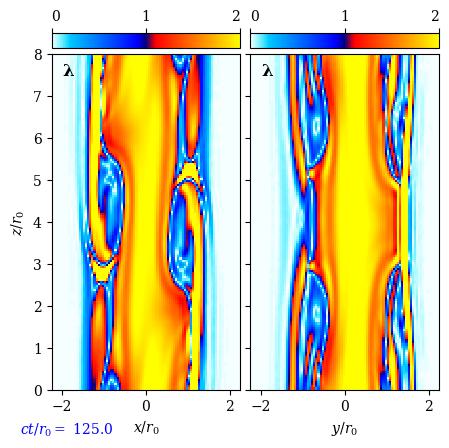
Safety first: Stability and dissipation of line-tied force-free flux tubes in magnetized coronae
Columns and other structures of twisted magnetic field lines with footpoints anchored to a surface at both ends exist in several astrophysical scenarios. Current loops shining in X-rays during the growth of plasma instabilities are observed in the corona of the Sun and probably exist in other compact astrophysical objects, like highly magnetized neutron star…
-

Should junior scientists fall for peer-citation-cartels?
Citation cartels formed by journals are a well-known thread to scientific publishing. But this text is not about journals pushing authors to cite certain other journals to hack the journal impact factor (see Smith, 2006; for a comment on the journal impact factor). Here, I discuss my opinion about a strategic possibility for researchers to polish…
-
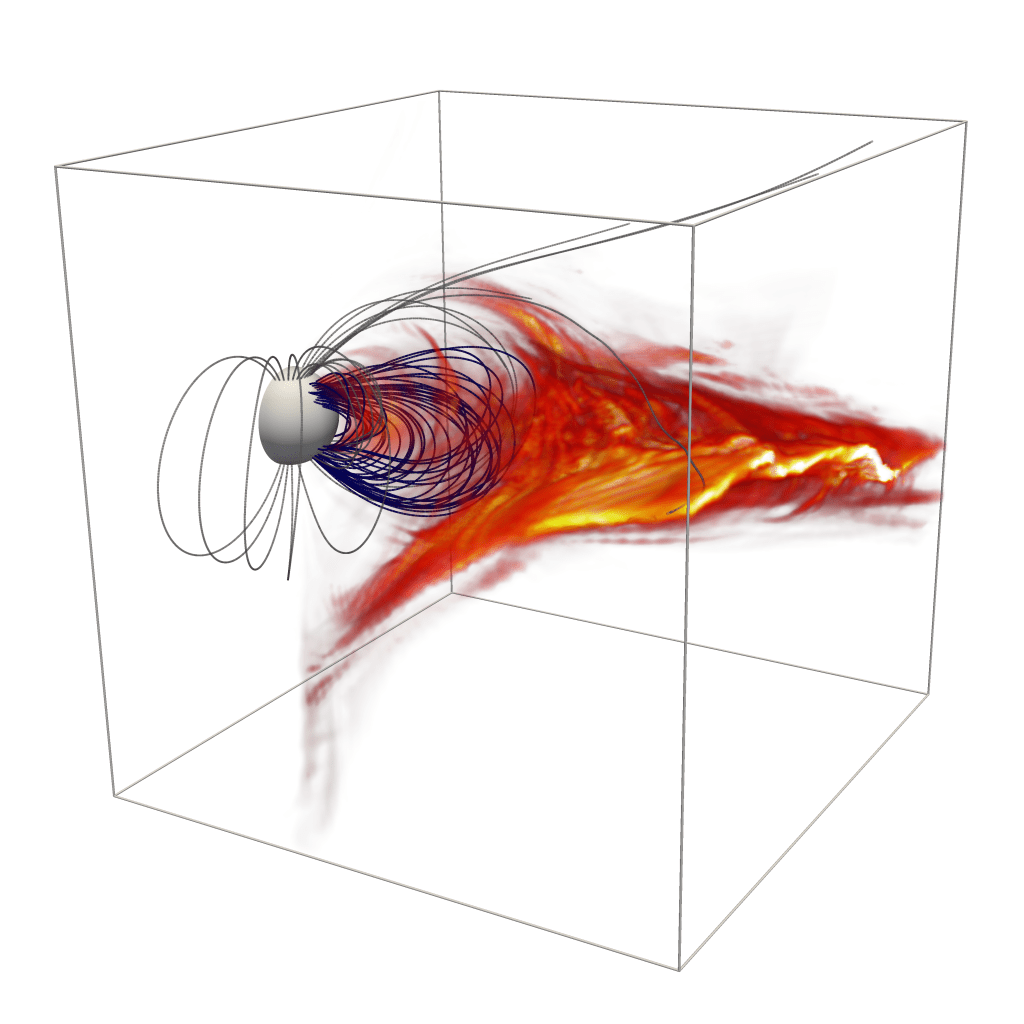
Kinking flux tubes and global eruptions: The 3D dynamics of strongly twisted magnetar magnetospheres
The origin of the various outbursts of hard X-rays from magnetars, highly magnetized neutron stars,is still unknown. They range from frequent and faint events to the most energetic Giant Flares, spanning several orders of magnitude in burst energies. Our work explores how different instabilities of the magnetar magnetosphere can inject energy (shining in the X-ray),…
-
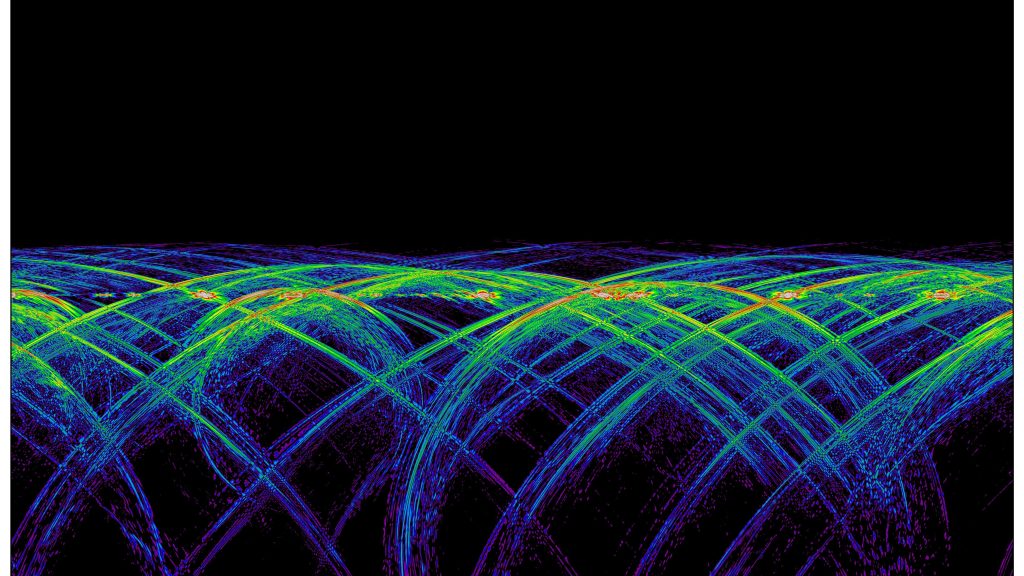
Electromagnetic fireworks in the striped magnetar wind
Fast radio bursts (FRBs) are millisecond blasts of GHz frequency with a complex spectral imprint of their cosmic origin. They are commonly observed from highly magnetized neutron stars, so-called magnetars. The exact origin of FRBs is still not known, and our model examines one possible mechanism to generate them. A very strong magnetic pulse propagates…
-
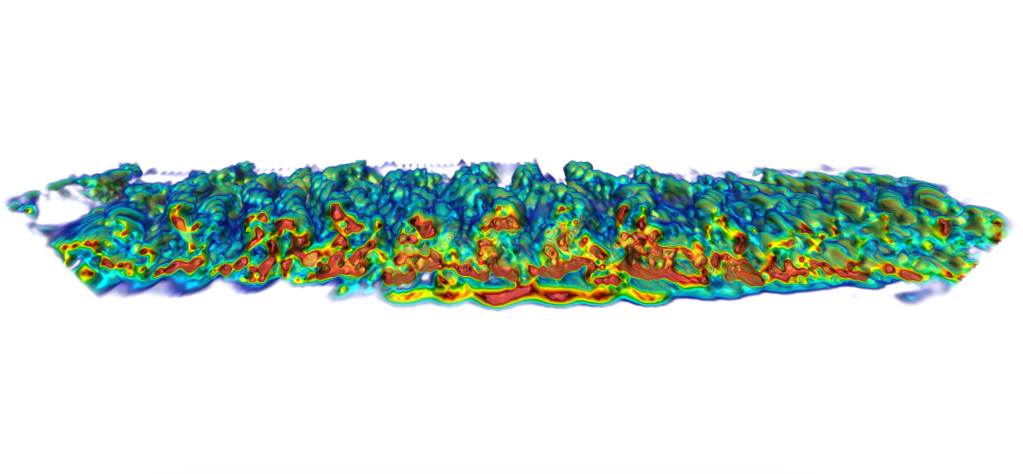
Current sheets in Alfvén wave interactions
Alfvén waves travel along magnetic fields in a plasma as variations in the electromagnetic fields and currents. Their interaction produces a plasma fluctuation that starts reacting with the primary waves. Mediated by this fluctuation, new plasma waves can emerge: Alfvén waves with shorter oscillations than the initial waves; and fast waves that can travel in…
-
Black hole variability by magnetic loop accretion
Magnetic field lines entering the event horizon of a rapidly spinning black hole can slow down its rotation, effectively acting like rubber bands that are dragged along with it. This process is a well known theoretical concept under the name of the Blandford/Znajek process. Though this theoretical model appeals through its clarity in simple equilibrium…
-
Black holes in computers – modeling astrophysics
Modeling physics in computers requires discretizing continuous quantities in space. Approximations are key to simplify the abundance of dimensions in systems with millions of particles, waves, and their interactions across scales. One such approximation is to assume that a magnetized plasma behaves like a fluid. Theoretical physicists then assign densities, electromagnetic fields, and velocities to…
 jensmahlmann.com