Category: Publications
-
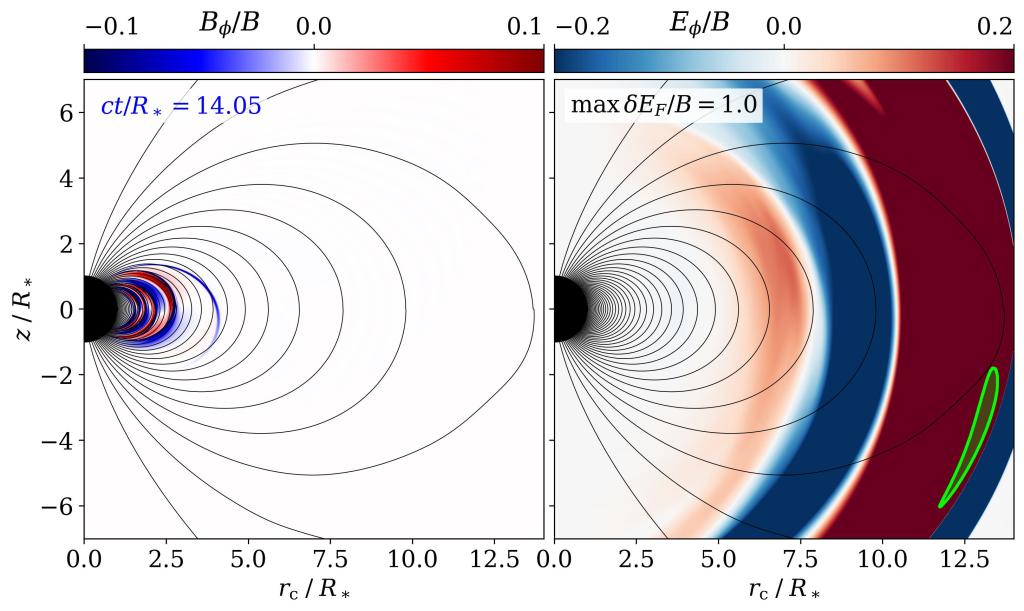
Force-free wave interaction in magnetar magnetospheres: Computational modeling in axisymmetry
Magnetars, highly magnetized neutron stars, can experience crustal quakes that disrupt their magnetic fields and cause X-ray and fast radio bursts (FRBs). This study uses simulations to model plasma waves in magnetar magnetospheres and to understand how magnetic energy is transported. We find that Alfvén waves can transform into fast magnetosonic (FMS) waves, especially when…
-
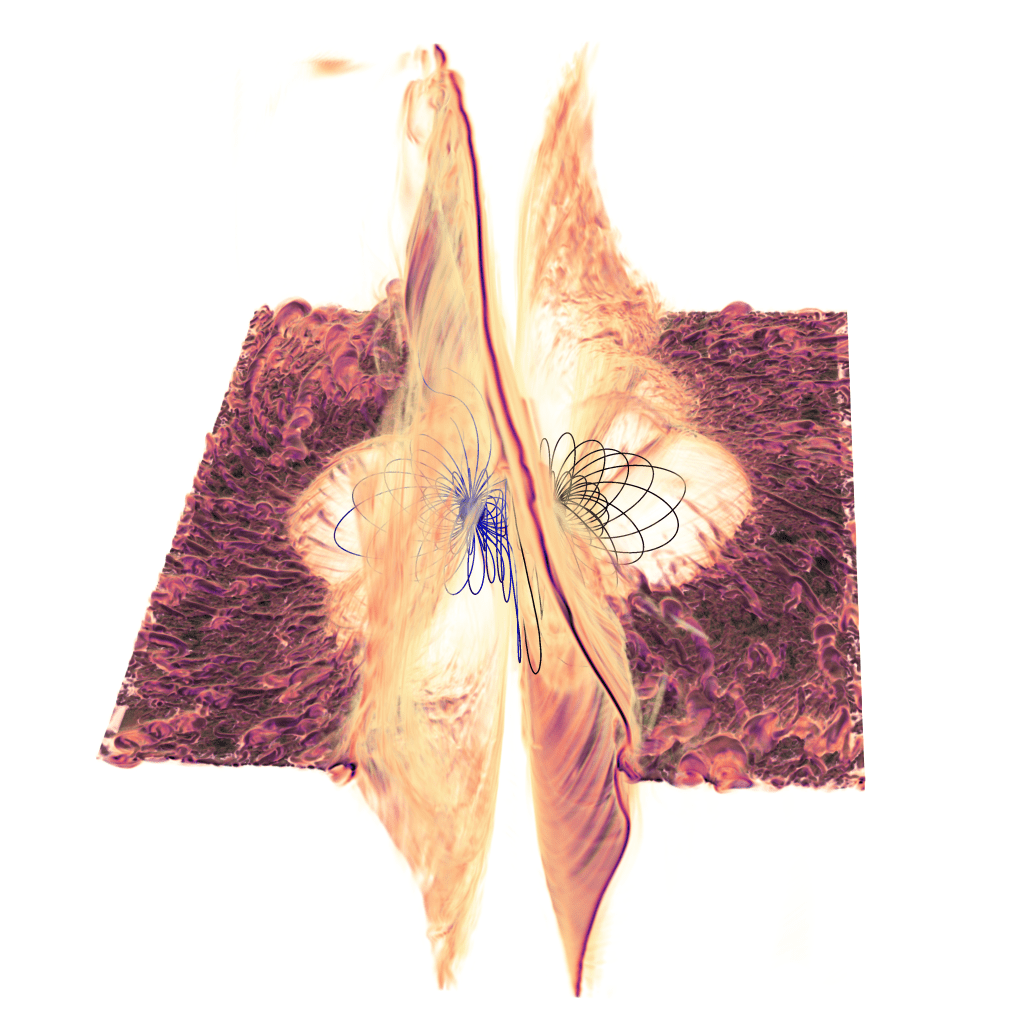
How ultra-magnetized Kelvin-Helmholtz drag impacts precursor emission in neutron star binaries
When binary neutron stars merge, they produce remarkable signals that help astrophysicists understand their composition and magnetized environments. The strong magnetic fields of two neutron stars orbiting each other interact vigorously. Astronomers hope to detect electromagnetic signals before the merger, which would announce a neutron star collision before it happens and allow it to be…
-
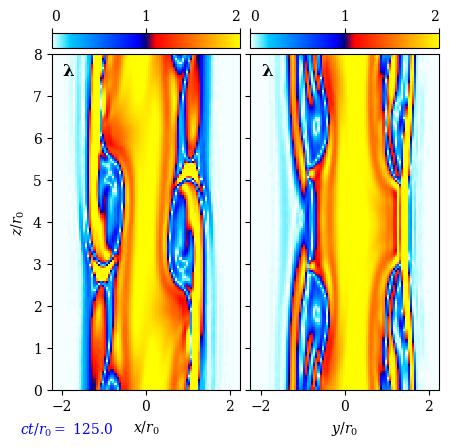
Safety first: Stability and dissipation of line-tied force-free flux tubes in magnetized coronae
Columns and other structures of twisted magnetic field lines with footpoints anchored to a surface at both ends exist in many astrophysical settings. Current loops shining in X-rays during the growth of plasma instabilities are observed in the corona of the Sun. They probably also exist around other compact astrophysical objects, such as in highly…
-
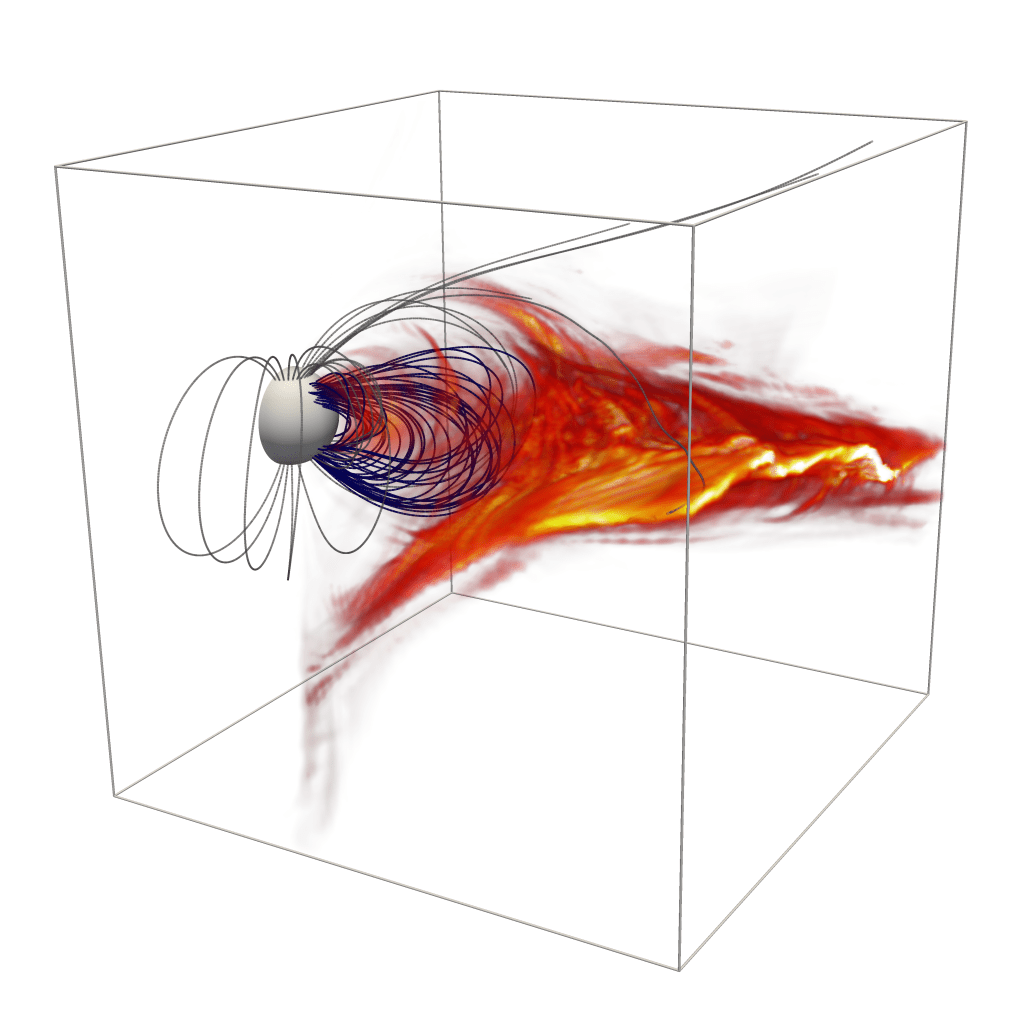
Kinking flux tubes and global eruptions: The 3D dynamics of strongly twisted magnetar magnetospheres
The origin of hard X-ray outbursts from magnetars, highly magnetized neutron stars, is still unknown. These outbursts range from frequent faint events to the most energetic Giant Flares and span several orders of magnitude in energy. Our work explores how different instabilities of the magnetar magnetosphere can release energy that shines in X-rays. They can…
-
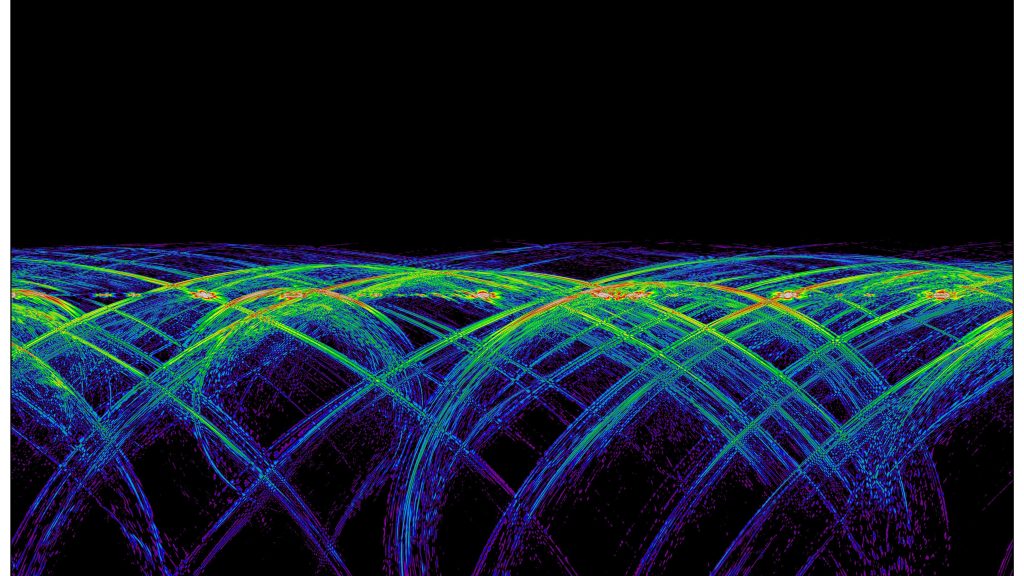
Electromagnetic fireworks in the striped magnetar wind
Fast radio bursts (FRBs) are millisecond flashes of GHz radio waves that carry a complex spectral imprint of their cosmic origin. Highly magnetized neutron stars, so-called magnetars, are leading candidates for their sources, and in 2020 an FRB was detected from a magnetar in our own galaxy. The exact origin of FRBs is still unknown,…
-
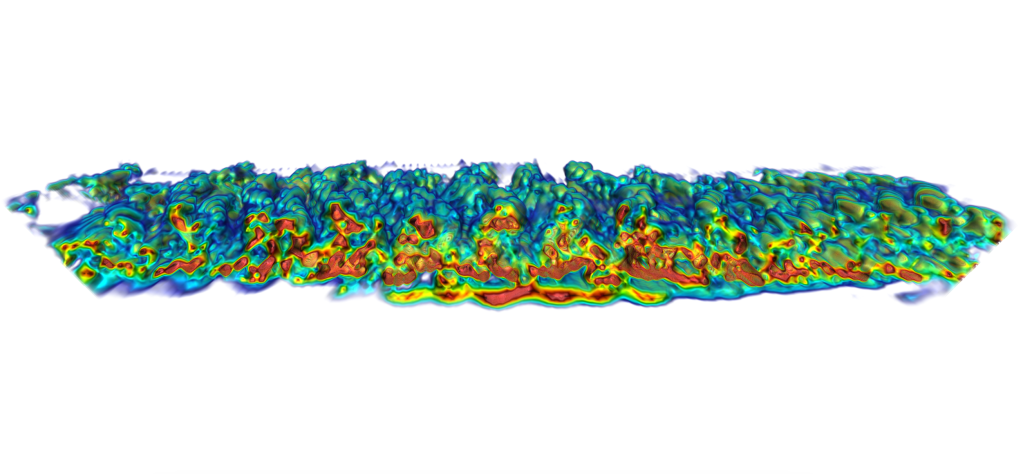
Current sheets in Alfvén wave interactions
Alfvén waves travel along magnetic fields in a plasma as variations of the electromagnetic fields and currents. When two such waves interact, they produce a plasma fluctuation that starts reacting with the primary waves. Mediated by this fluctuation, new plasma waves emerge: Alfvén waves with shorter oscillations than the initial waves, and fast waves that…
-
Black hole variability by magnetic loop accretion
Magnetic field lines entering the event horizon of a rapidly spinning black hole can slow down its rotation, acting like rubber bands that are dragged along with it. This theoretical concept is well known as the Blandford/Znajek process. While the model is appealing for its clarity in simple equilibrium solutions of magnetic fields around black…

